

Constraint. Not Structure.
A lesson from Thoreau, tarot, and wildflowers


I’m fine with words like suffering and death, but say the word structure and I instantly feel like someone shoved a pillow over my face, air lifted a chunky gorilla and deposited it on top.
That’s shorthand for: it triggers the fuck out of me.
I don’t need to ramble about the why. It’s not unique (insert a harmful system here).
As I’ve grown more curious about this and started creating more, I accidentally stumbled upon a word that may be a suitable replacement: constraint.
Which then naturally meant I needed to consider the word: restraint.
According to Google (this also made me want to go thrift an actual dictionary btw):
Constraints are generally external.
Restraints are internal.
The thing that surfaced this aha’ was my use of tarot as a way to fuel my creative practice. The deck is only 78 cards, my mind is bottomless.
IT’S A CONSTRAINT! Eureka.
As a result it becomes deeply generative. As anything, there’s nuance here. I don’t like tarot spreads. Spreads are an additional external constraint, and they don’t mesh with the way my nonlinear brain moves (I dove into that in detail here).
Too much constraint forces restraint, and that snuffs out generativity.
So not all constraints are created equal.
Once I started holding these two words in my mind, I started to see the threads everywhere.
I recently listened to Katherine May describe how she does her best writing under situational constraint, in the hours between daily life.
Then came Henry David Thoreau. If I could be reincarnated as a Transcendentalist, I would. Make me Margaret Fuller though please (this is a great novel). As I was watching the Ken Burns documentary, I began to look at Thoreau’s cabin not just through the symbol of simplicity that it was, but as the possibility that it was a self-selected constraint.
That maybe the simplicity wasn’t the point. The container was.
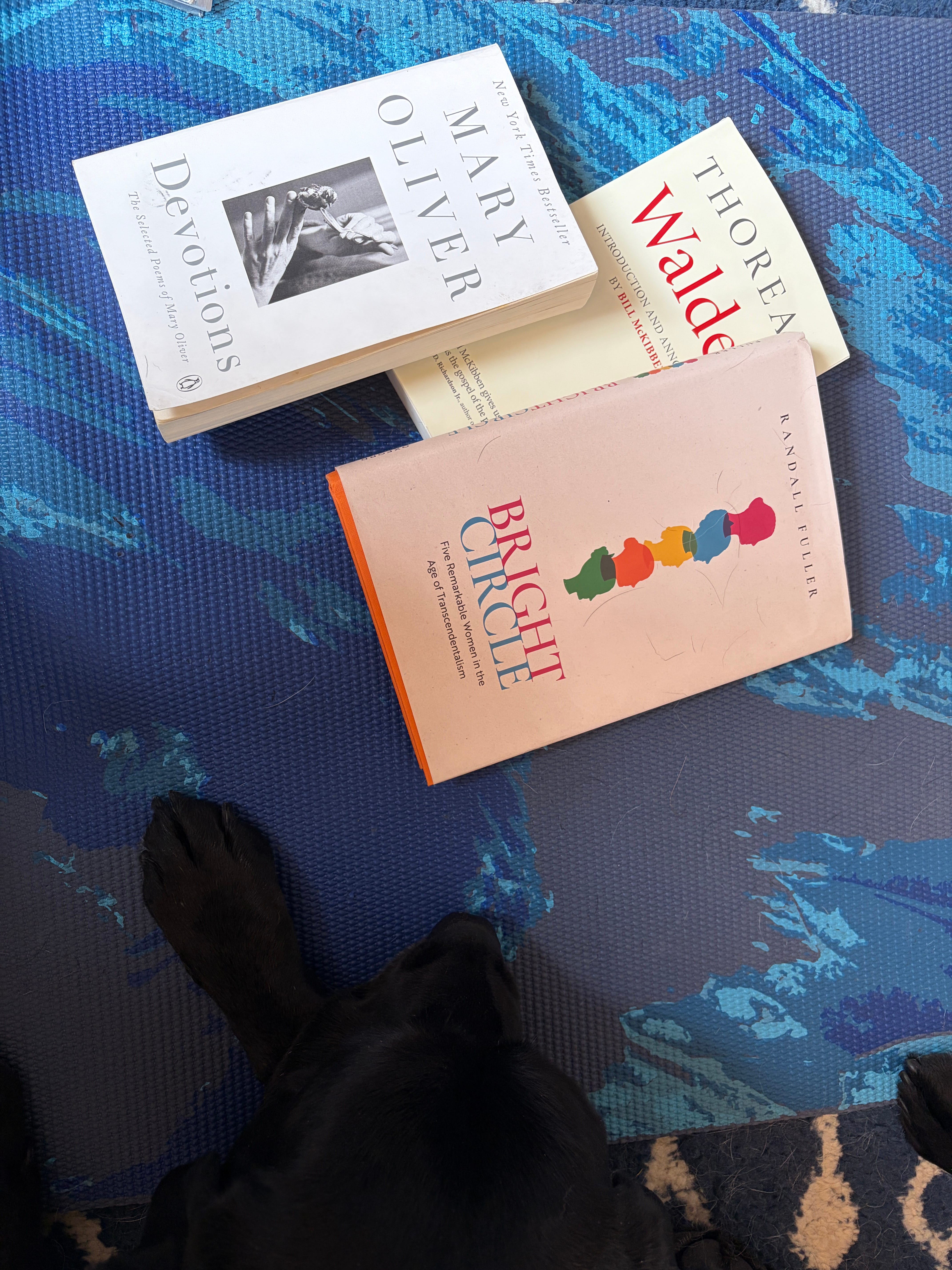
Thoreau spent his days wandering Walden Pond and the surrounding woods in the vast expanse of his own thinking. My literal dream come true.
That kind of openness is wildly generative, but it’s also destabilizing if you stay in it too long. I also know that truth deeply.
The cabin wasn’t just where he wrote. It was the constraint where he came back to.
After I left teaching, I became a contractor. I don’t have kids. I’m not in a partnership right now. I’m largely left to my own devices, which at first felt genuinely liberating and it was precisely what I needed…for a while.
Over time what I’ve realized though is that my resistance to structure, had left me in a kind of frozen state.
Because I was avoiding picking a direction, I wasn’t able to be generative. Too many options. Not enough container. The freedom I was protecting was quietly working against me. There was nowhere to come home to.
I think this is where agency slots in for me. Maybe constraints work when you select them yourself. When you opt in, they can be liberating, even generative. They’re not always comfortable, in fact they can create lots of discomfort at first, but they’re yours.
There’s evidence of this all over the place.
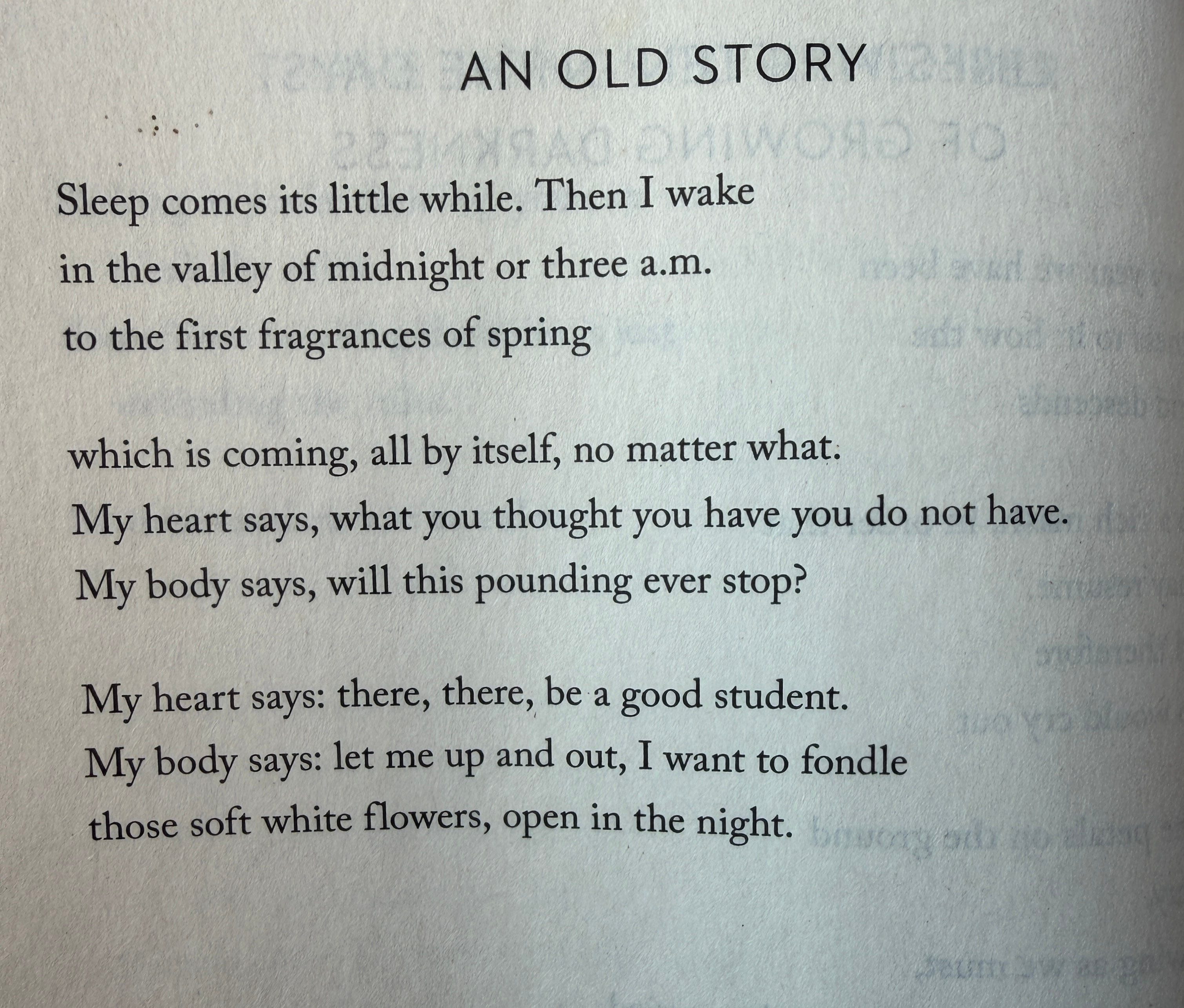
Look at poetry. When we choose to write inside a form (even free form poetry still has a form: the resistance of one), the words start creating tension against the edges, and that tension is where the magic lives.
The constraint doesn’t limit the poem. It makes the poem possible.
We see this in nature too. Wildflower seeds get dispersed on the wind, sometimes traveling enormous distances.
But the seed doesn’t become anything until it lands somewhere, until it finds a crack in a sidewalk or a hollow in a tree or a particular patch of soil: a constraint.
Nature isn’t trying to avoid constraint. It’s always looking for the right one.
Then there are human to human relationships. Each time we opt in we’re also choosing constraint: differing wants, differing needs, different processing styles, different histories.
I don’t think constraint in relationship is the same as compromise though. Compromise has this connotation of both people losing something, meeting in the middle, shrinking toward each other.
I think constraint in a relationship isn’t about losing. It’s about two people creating a container together that neither could have built alone.
We need that.
We also need to wander.
And collect experiences, questions, half-formed thoughts, feelings we don’t have words for yet.
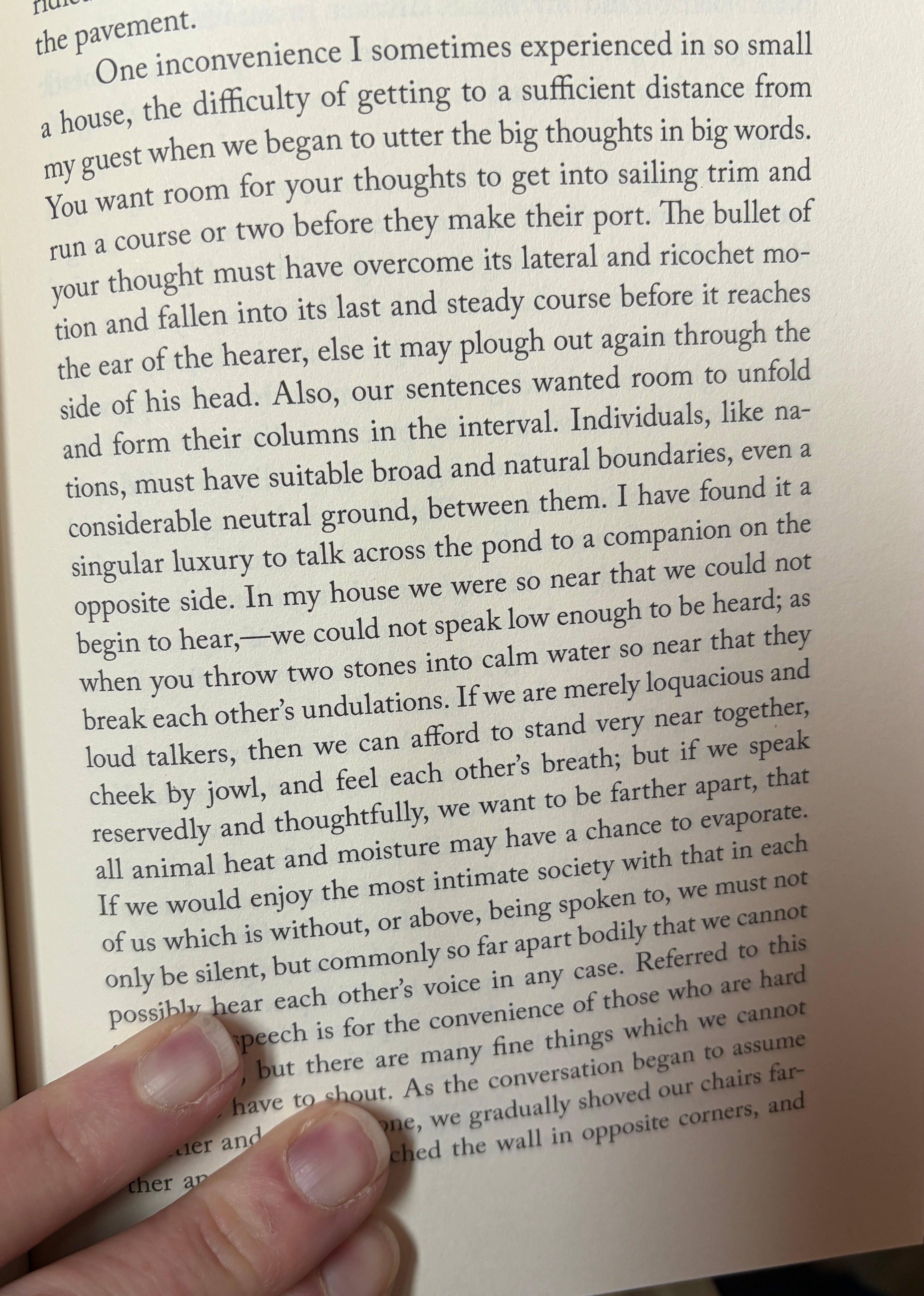
The wandering is the ingredients, but the constraint is the kitchen.
It’s what turns raw experience into something we can work with, into growth.
I think that’s why we need other people too. Not just for connection, but because other people are a constraint that gives our thinking somewhere to land. You get lost in your own head for long enough and it starts to go sideways, but you say something out loud to someone, and suddenly it has edges. It becomes something you can hold, transform, or set down for a while.
Journals work for this too, so do trees, but people are extra lovely.
Seeds already know this and I think, somewhere underneath all the baggage I’ve carried around the word structure, I’ve always known it too.
Choosing a direction creates the constraint that allows it to be generative, that allows us to grow.
Some questions I’m sitting with:
When are constraints helpful?
When can constraints tip the scales too much and result in harmful restraint?
How can I make use of self-selected constraints?

I use hours as constraints for usefulness. Great read 📖 Keep floating 🙌